

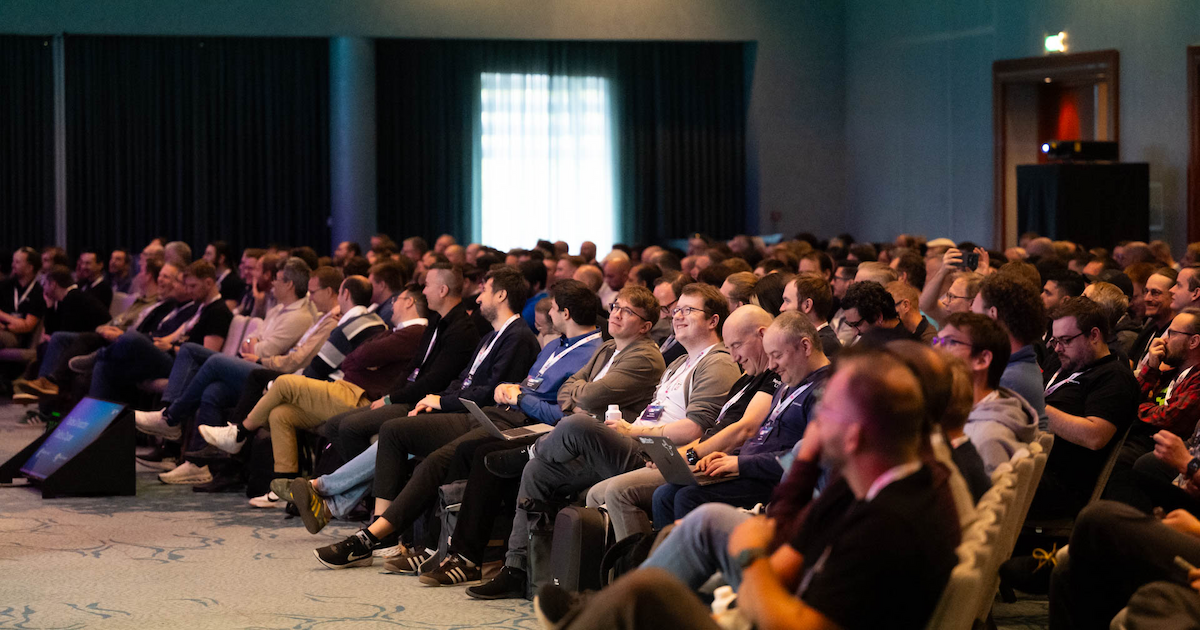
On 15 and 16 October, more than 400 people building on Talos Linux gathered at Hotel Okura in Amsterdam for TalosCon 2026. The two-day program brought over 30 speakers to the stage, with live demos, real-world stories, and plenty of time to connect in person. Here’s a look at what happened.
A keynote commitment to free and open source
The Grand Ballroom filled before the first session started. Steve Francis, president of Sidero Labs, opened the main day, joined on stage by Anant Yardi, founder of Yardi, the parent company of Sidero Labs. Their energy was contagious, and it ran through the whole session.
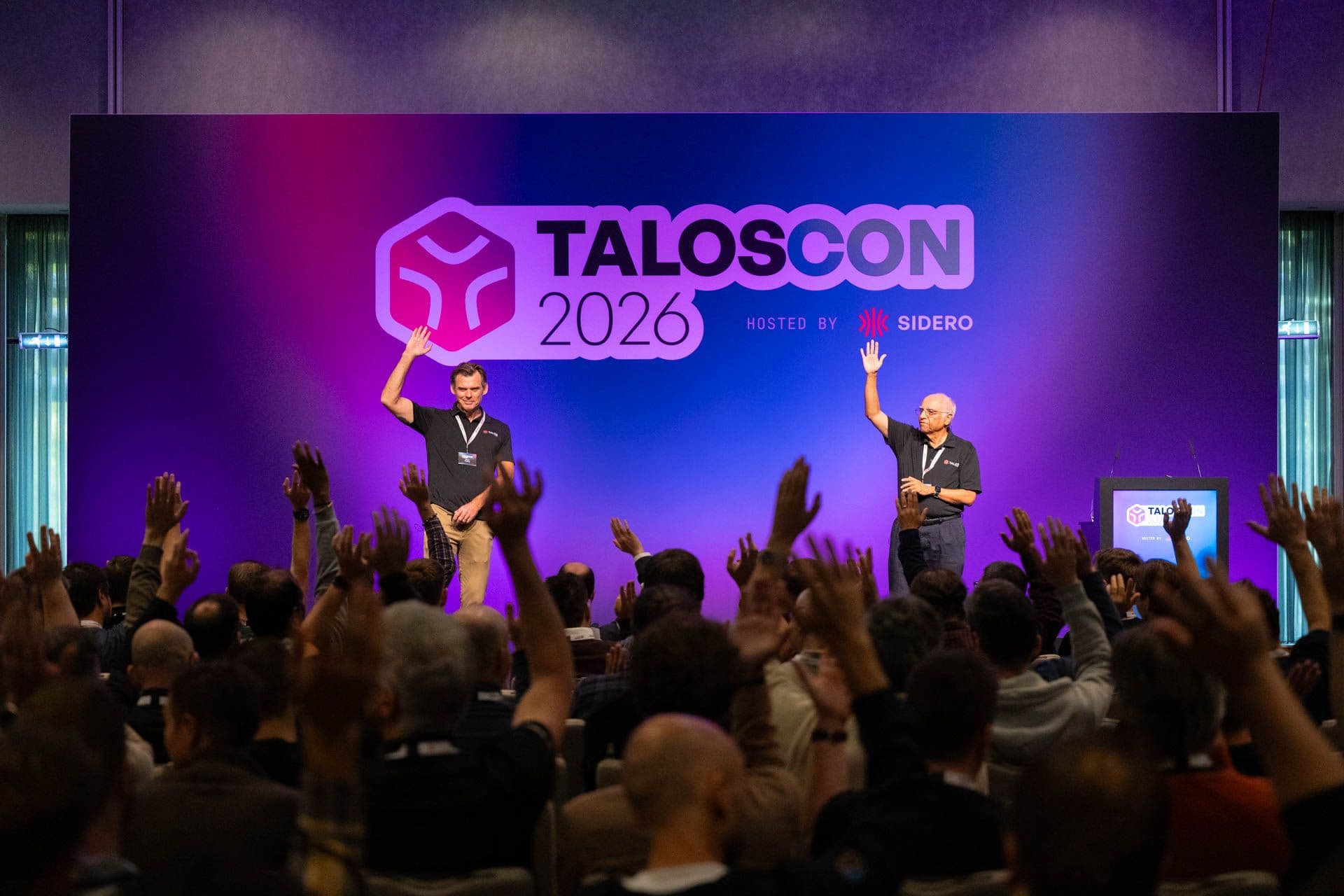
It started with Steve Francis looking back at the 2019 vision of an OS with no shell, no SSH, and an API for everything, now running at banks, health systems, internet exchanges and sovereign clouds. From there, Anant Yardi turned to where Talos is heading: one open-source OS for containers, Kubernetes and virtual machines.
And both made the same commitment: Talos Linux, including Talos Hypervisor, Kubernetes and container functionality, stays free and open source under MPL 2.0. Talos Omni, Talos Director and Talos Cupar remain commercial products. To show they meant it, Steve Francis closed by announcing that Talos Omni Hobby is now free for up to 10 nodes and two users.
Talos 1.14, the biggest release so far
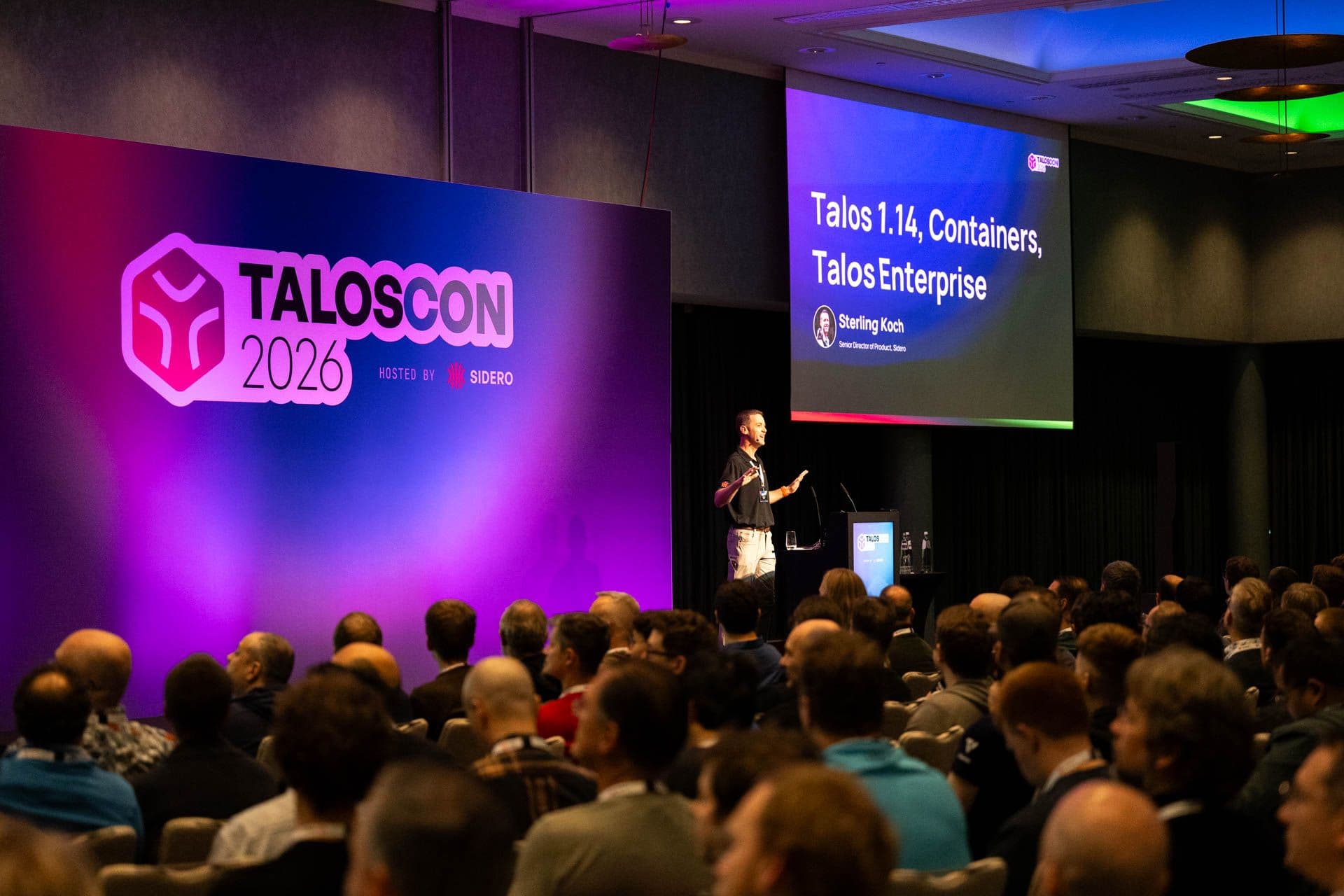
Sterling Koch, senior director of product at Sidero, walked through Talos 1.14, the largest Talos release yet, with 623 changes and 44 main features, up from 2 in version 0.9. Highlights include configuration changes without a reboot, declarative LVM and software RAID, built-in BGP, and Kubernetes in its own sandbox.
Talos 1.14 also introduces Talos Containers, which run with or without Kubernetes. It is designed for edge boxes, appliances, and the VMs you might want to replace. One Sidero team member had already started moving old Debian VMs to it.
All 1.14 features are part of free, open-source Talos Linux. Talos Enterprise Linux uses the same code and adds what security reviews ask for, such as per-build SBOMs, VEX data, and CVE SLAs. The team also released 1.14.3 and 1.14.4 during the conference.
Talos Hypervisor, live on stage
Justin Garrison, field CTO at Sidero, gave Talos Hypervisor its first public showing, running the Talos 1.15 alpha on a small bare-metal box on the lectern. It was the demo many people had come to see.
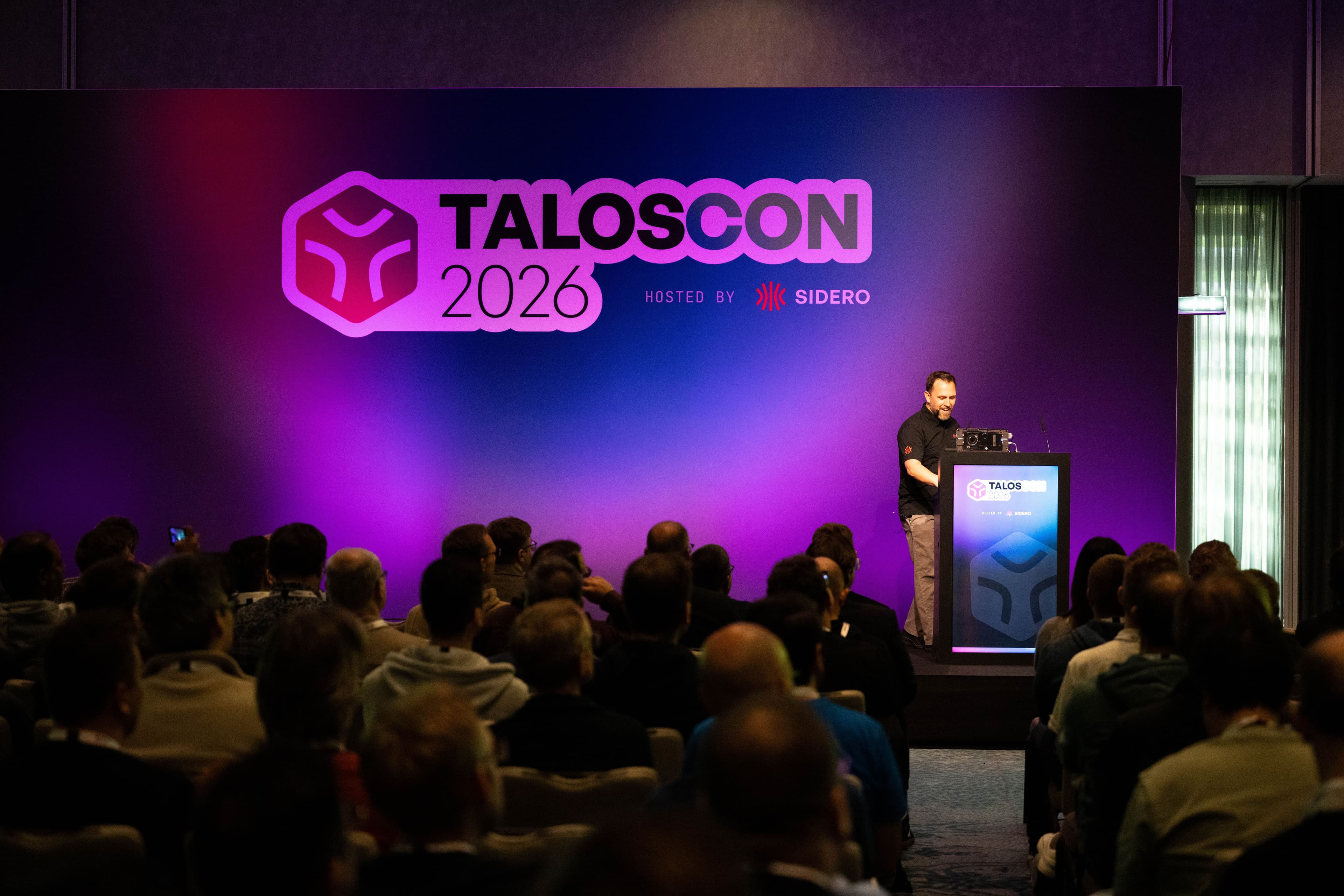
Built on KVM, it runs virtual machines directly on Talos with no Kubernetes needed on the host. He applied a VM configuration without rebooting, and the new VM booted Talos and joined an Omni cluster as a Kubernetes node. A Windows guest followed. To finish, Omni created virtual machines across several hypervisors, connected with KubeSpan.
The hypervisor is in alpha now, with general availability planned for December 2026.
Talos Director in production
Neil Levien, senior director of Cloud Services at Yardi, showed Talos Director on stage for the first time, running Yardi’s production environment with thousands of virtual machines and hundreds of Kubernetes clusters. It manages compute, storage and networking across the data center, with Talos Omni built in.
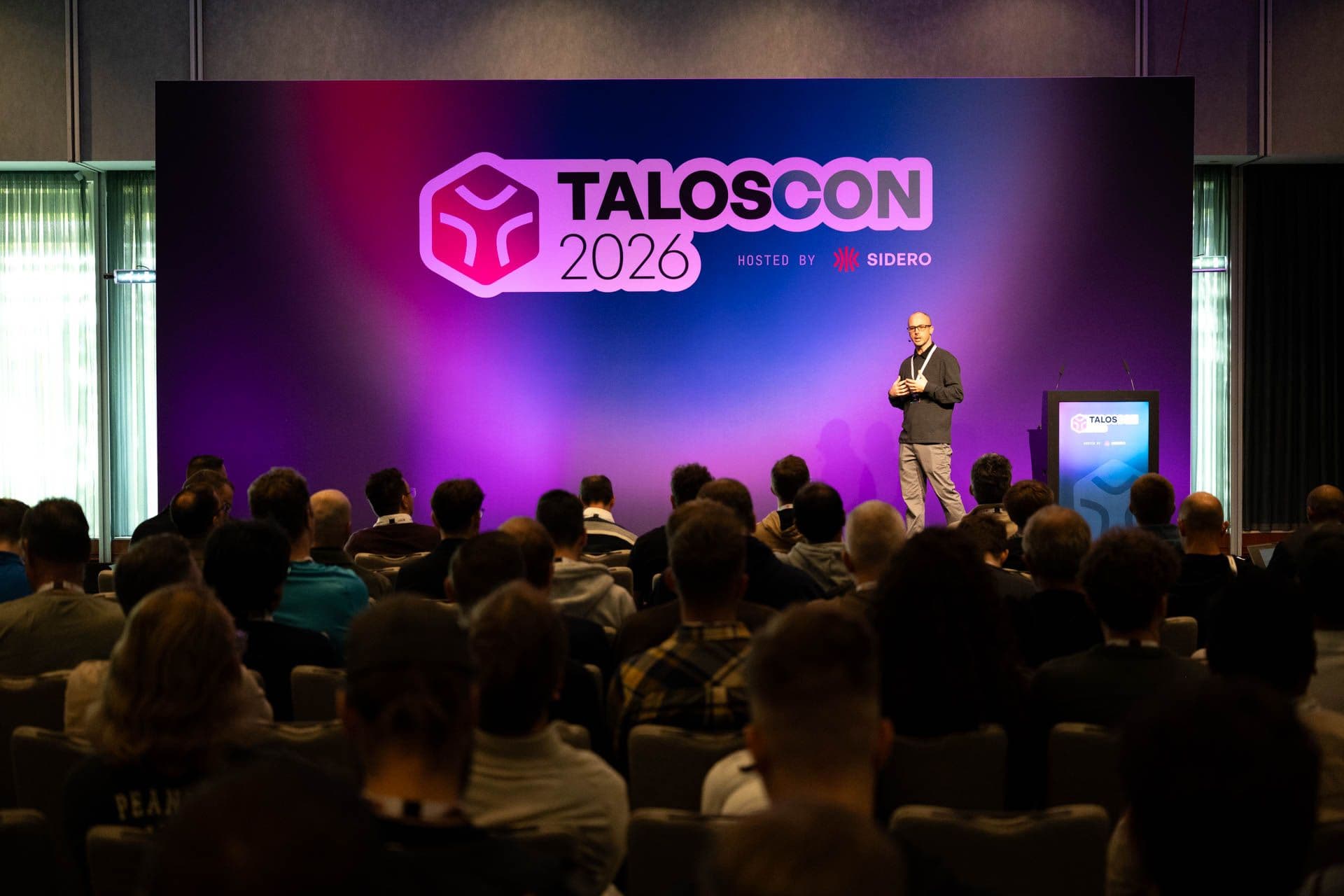
He walked through high availability and micro-segmentation enforced by an eBPF filter in each host’s kernel. The audience had many questions afterward, from automation and backup to homelabs. Talos Director is in Limited Availability, with general availability planned for January 2027.
Organizations can apply at siderolabs.com/getdirector.
Talos Linux for AI and Talos Cupar
Anant Yardi then turned the session to AI, with the first on-stage look at both products. He walked the room through the stack from the bottom up, from data to assistant. Talos provides the scaffolding: NVIDIA and AMD GPU support, model serving, model training, RAG and MCP, with Talos Linux for AI as the free, open-source foundation. Each team adds its own models, training instructions, documents, and databases on top.
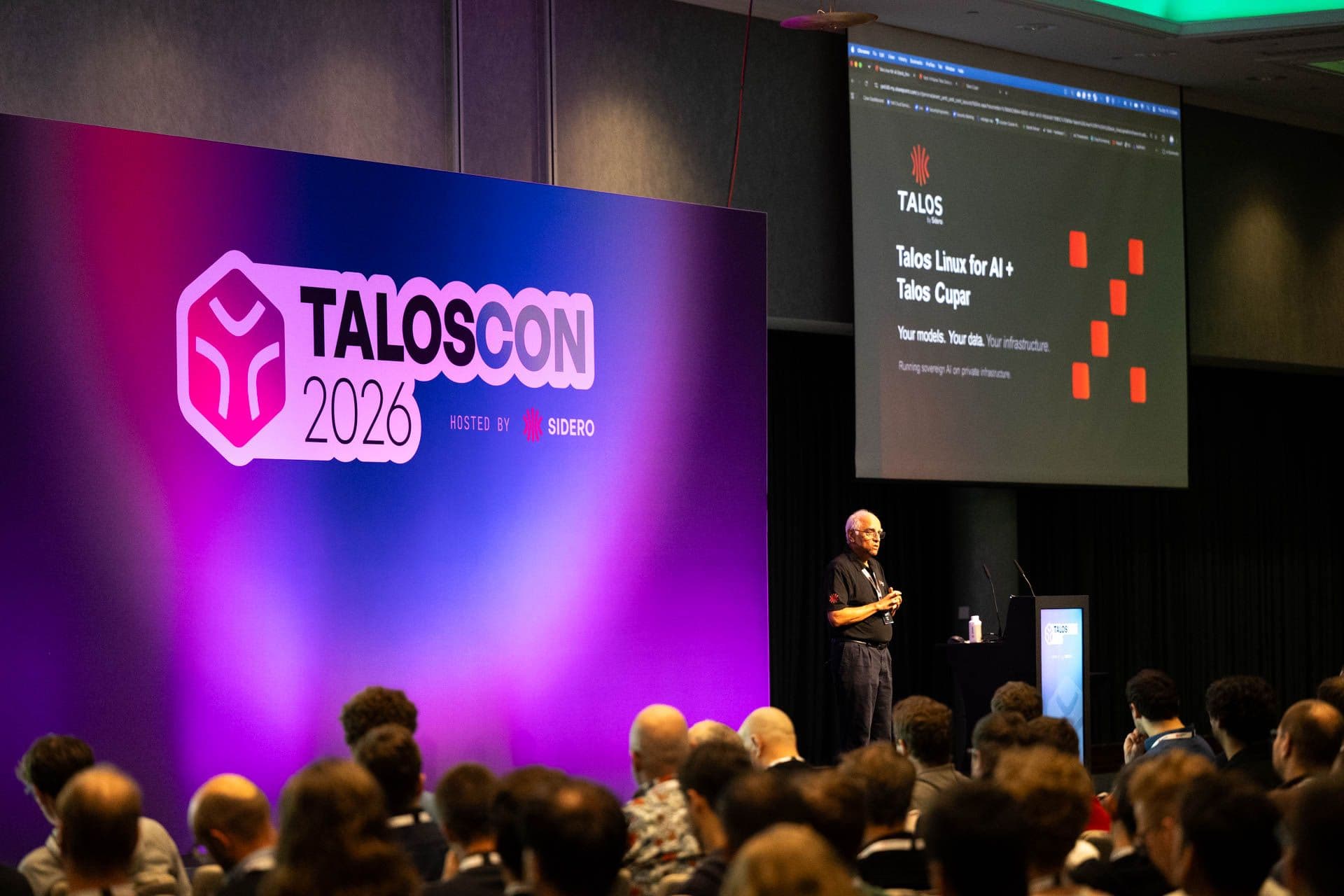
Cupar is the commercial layer that brings together models, data and infrastructure, playing the same role for AI that Talos Director plays for the data center. As proof, Anant Yardi pointed to Virtuoso Enterprise, Yardi’s AI platform used by hundreds of Yardi clients, which is built on Talos Cupar.
Both products are planned for general availability in March 2027.
A panel on sovereign cloud and AI
The after-lunch panel brought a wide range of views to the stage. Steve Francis moderated, with Anant Yardi, André Alfter of Bechtle, Timo Lakner of Schwarz Digits, the parent company of STACKIT, and Dario Maisto of Forrester.
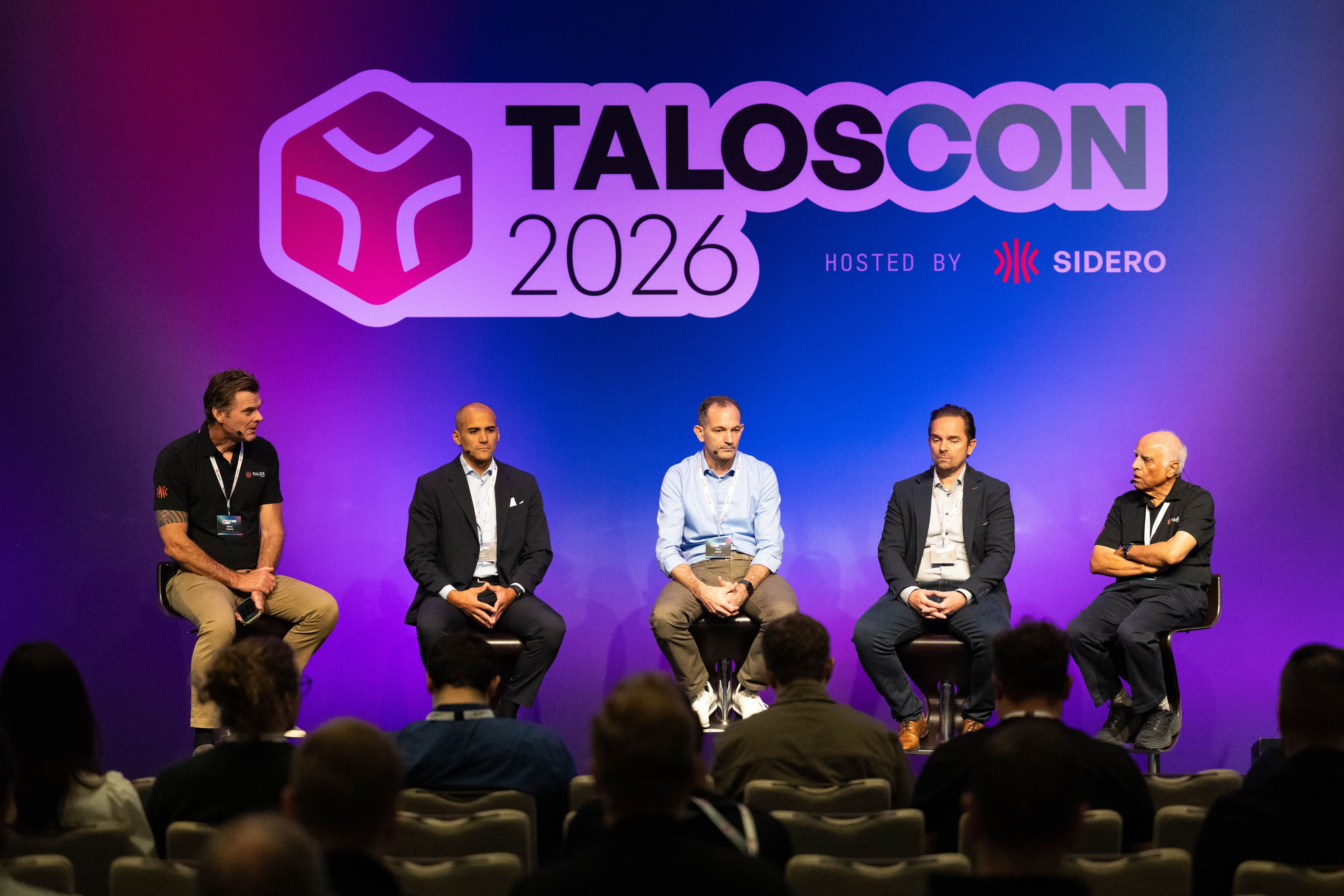
The central question was how much control an organization keeps over its infrastructure, from licensing to self-hosting. Steve Francis shared that many Omni customers in the EU self-host for sovereignty reasons.
On model choice, Anant Yardi summed it up: you do not need a frontier model to approve invoices. The AI session made this point, with open-weight models as a starting point for running AI on your own infrastructure.
Three tracks in the afternoon
After the panel, the focus shifted from roadmaps to real deployments. Nokia shared how it runs a GPU cluster on bare-metal Kubernetes with Talos. DHL eCommerce discussed resilience for edge computing.
Other talks covered critical hospital infrastructure, reengineering a data center with Talos at its core, and building a sovereign Kubernetes platform.
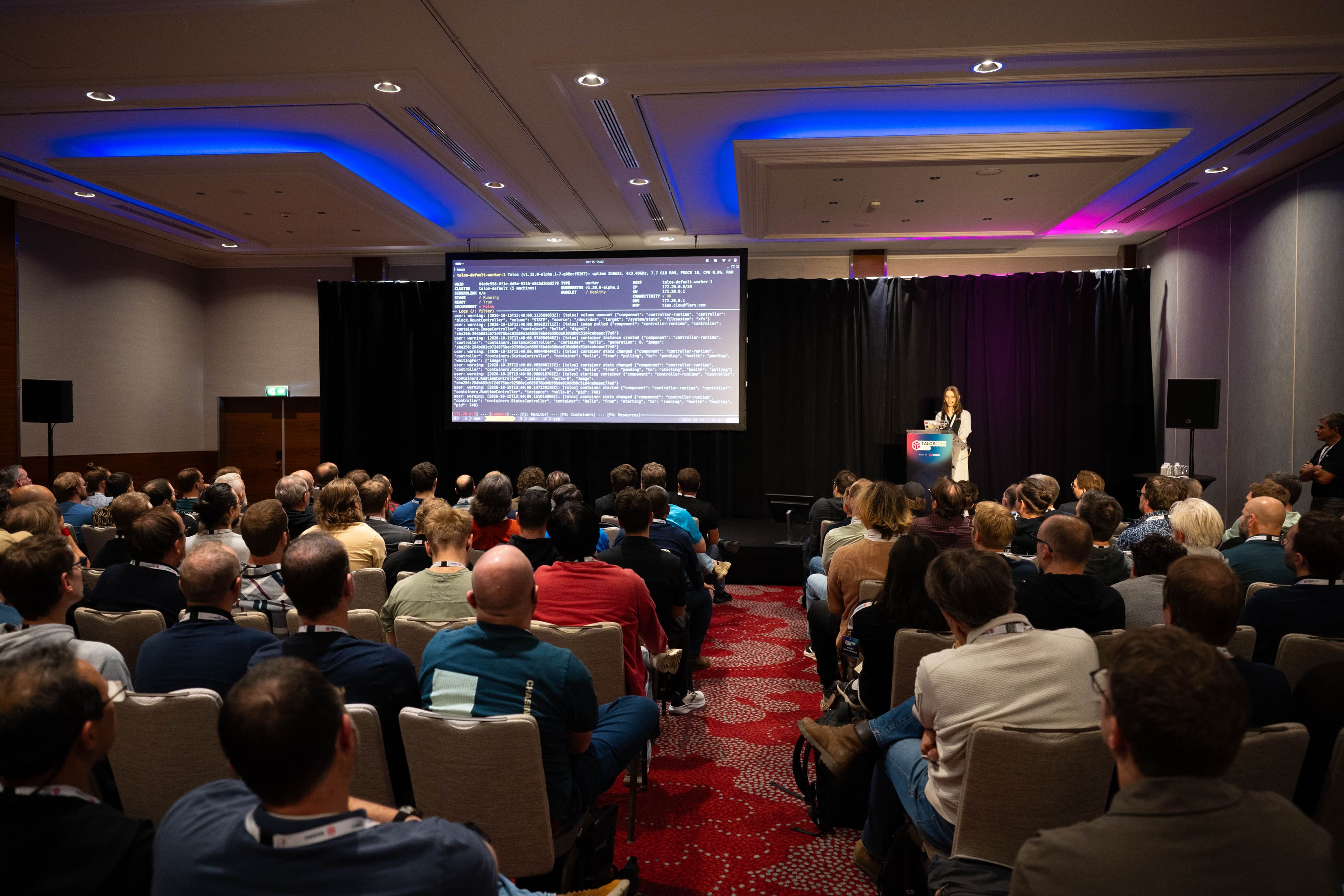
Several sessions went deep on the declarative model, from Talos and Omni in OT production to Talos as the OS that never stops reconciling. Sidero engineers gave an inside look at Omni and Talos Containers.
Track 3 also covered stateful storage at the edge. PostFinance talked about open-sourcing TOPF, its tool for migrating and managing Talos Linux clusters. Homelab users had a session of their own.
Steve Francis closed the main stage with final takeaways and an open Q&A.
Day 2: stories from teams running Talos
Friday morning featured community talks, with speakers sharing what they built with Talos. Two of the talks focused on moving off the hyperscalers. One speaker covered a move from AWS to on-premises hardware, and another ran two clusters with zero hyperscalers.
The closing talk showed how one team made the business case for a new Talos-based managed platform, with advice on how to convince your board to drop everything and start over.
Other sessions covered automating Talos upgrades and configuration changes with small controllers, the advantages of a minimalist OS, and the developer experience with Talos and Omni.
Between the sessions
TalosCon was just as engaging off stage. The Sidero team flew in from around the world, and the engineers who build Talos Linux, Omni and Director were on hand throughout both days, so questions from the talks could go straight to the people behind the features. The crowd ranged from hobbyists to teams running Talos at scale.
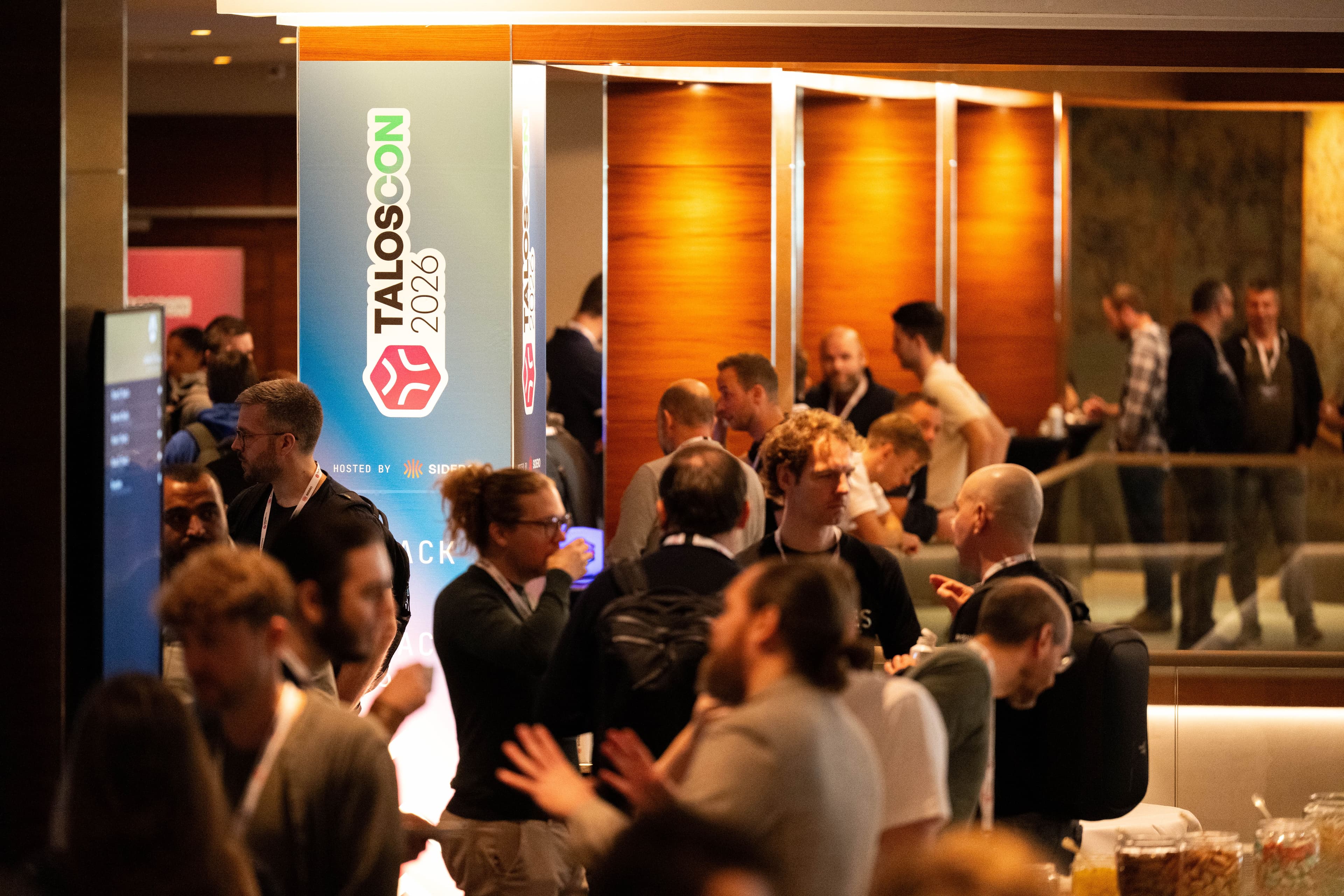
Thank you to every speaker who brought a talk to Amsterdam and to everyone who joined in person. TalosCon 2026 was made possible with the support of Portainer, Simplyblock, Bechtle and TrueFullstaq. All talks will be on the Sidero Labs YouTube channel.
Up next: KubeCon, Gartner and TalosCon Santa Barbara
- KubeCon, Salt Lake City, Utah, 9-12 November. Sidero Labs is a sponsor, with the team present at a booth in the Solutions Showcase.
- Gartner IT Infrastructure, Operations & Cloud Strategies Conference, Las Vegas, Nevada, 8-10 December
- TalosCon Santa Barbara, California, 26-27 January 2027
 Steve Francis
 Hannah Augur